Elasmobranch fishes (sharks, skates, and rays) include species inhabiting the full spectrum of environmental salinity, and ranging from fully marine species, through those exhibiting all degrees of euryhalinity, to completely freshwater forms. Their means of dealing with their problems of regulating
internal water and salt content (osmoregulation) have been summarized by Smith (1931, 1936); Potts and Parry (1963); Thorson (1967); Hoar and Randall (1969); and Pang, Griffith and Atz (1977). MARINE SPECIES, Occurring largely offshore and in fully saline waters (±35 parts per thousand, or ppt) retain sufficient urea and other organic substances to maintaina concentration in body fluids that is hyperosmotic to the environment. Water is drawn in osmotically, providing the water needed for urine production and obviating the need for drinking seawater. A special structure, the digitiform or rectal gland, supplements the kidneys in secreting excess salt in a fluid containing about twice the concentration of NaCl found in the body fluids. EURYHALINE SPECIES are largely shallow-water, inshore forms. They function as marine species when in highly saline water, but when they move into brackish or fresh water, urea retention is relaxed, urea content of body fluids drops to 20-50 percent of marine levels, rectal gland function is reduced or ceases, and massive osmotic uptake of water is balanced by production of copious, dilute urine. Truly FRESHWATER SPECIES, the South American freshwater stingrays of the family Potamotrygonidae, permanently adapted to fresh water, have lost the ability to concentrate urea, although they have the enzymes to produce it, and they have a greatly atrophied and apparently non-functioning rectal gland. They are unable to revert to the ancestral urea retention, even when transferred to sea water, and cannot survive in sea water more concentrated than about 14 ppt salt.
The family Potamotrygonidae consists mainly of one genus, Potamotrygon (=Paratrygon), with 25 or more named species. Two other genera (Elipesurus and Disceus), each with only one species, are in an uncertain state (Castex, 1968, 1969; Bailey, 1969). The systematic status of these genera and of the
species of Potamotrygon is in need of thorough examination. Potamotrygonids are found in the larger drainage systems of South America that flow into the Caribbean and Atlantic, as well as some ofthe smaller systems. They represent the ultimate in freshwater adaptation in the elasmobranchs. In view of their uniqueness in lacking the otherwise universal elasmobranch characteristics of urea retention and a functioning rectal gland, they have been studied remarkably little and very little is known of their history on the South American continent. There is no fossil record to go by, as the only two references to fossil
potamotrygonids are almost certainly invalid (Thorson and Watson, 1975), so evidence must be sought in living rays.
The fact that the full range of salinity preference and/or salt tolerance of elasmobranchs is represented among the various ray species suggested that a comparative study ofthat group might be a rich source of information bearing on the evolution of freshwater adaptation.
To obtain the desired information, we set out to collect freshwater stingrays from each of the major South American drainage systems in which they occur, as well as coastal species of rays in the vicinity where each system empties into the sea. We concentrated on features of ray biology that might be expected to have undergone change as the transition took place from the marine to the freshwater way of life. The aspects deemed most pertinent were (1) urea content of body fluids in relation to environmental salinity; (2) morphological and functional condition of the rectal gland, also in relation to environmental salinity; and (3) helminth parasite fauna of the gut.
In the hope of understanding better the phenomenon of freshwater adaptation in elasmobranchs in general, the data gathered during the investigation have been directed more specifically to questions regarding the potamotrygonids. These questions concern the physiology of osmoregulation of the freshwater rays, their zoogeographic origin and mode of colonization of their present range, and their phylogenetic history and affinities.
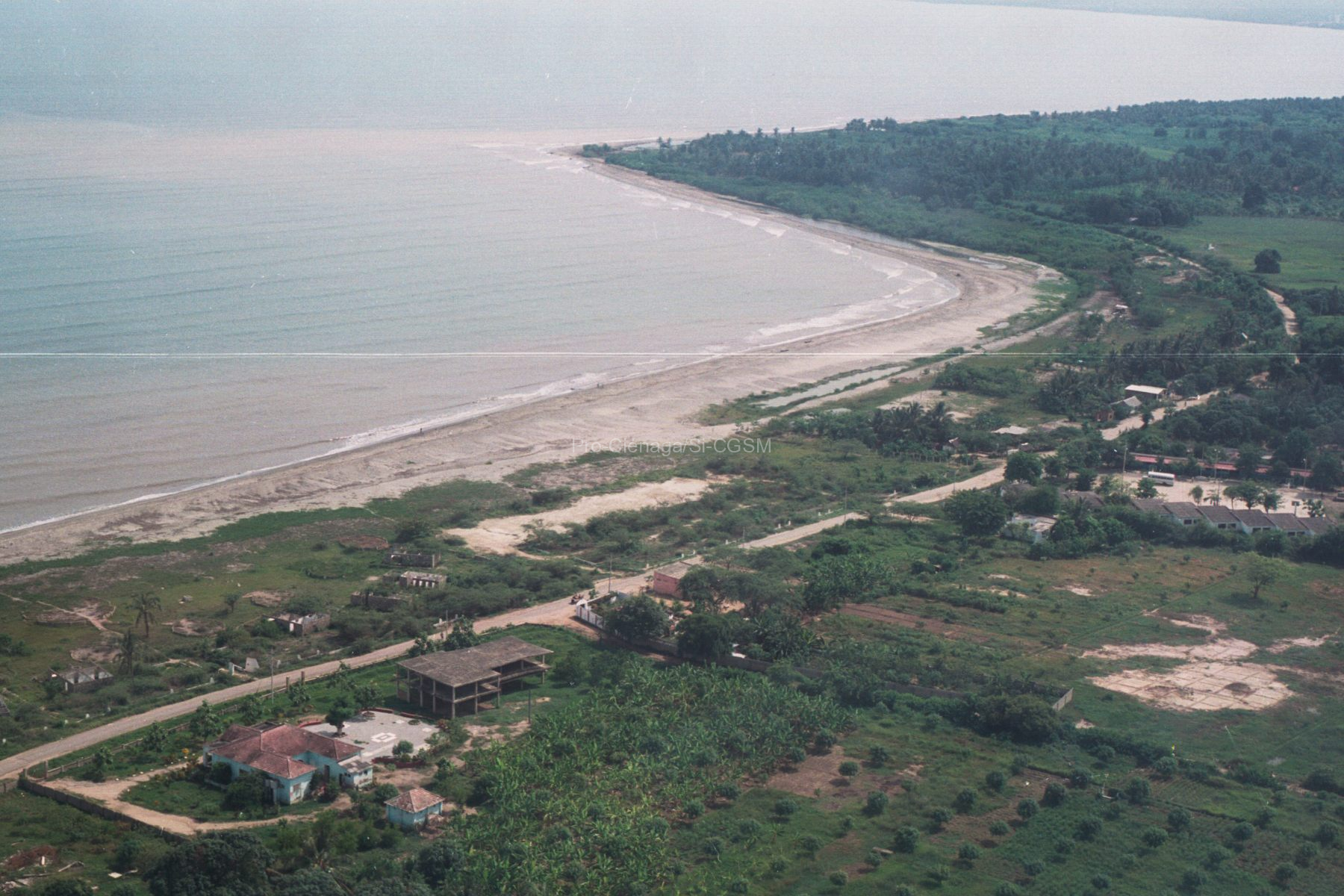
Stingrays: Hypanus guttatus (Dasyatis guttata), Styracura schmardae (Himantura schmardae) and Urotrygon venezuelae are reported for the CGSM (Tab. 1), visited during summers of 1975 and 1976.