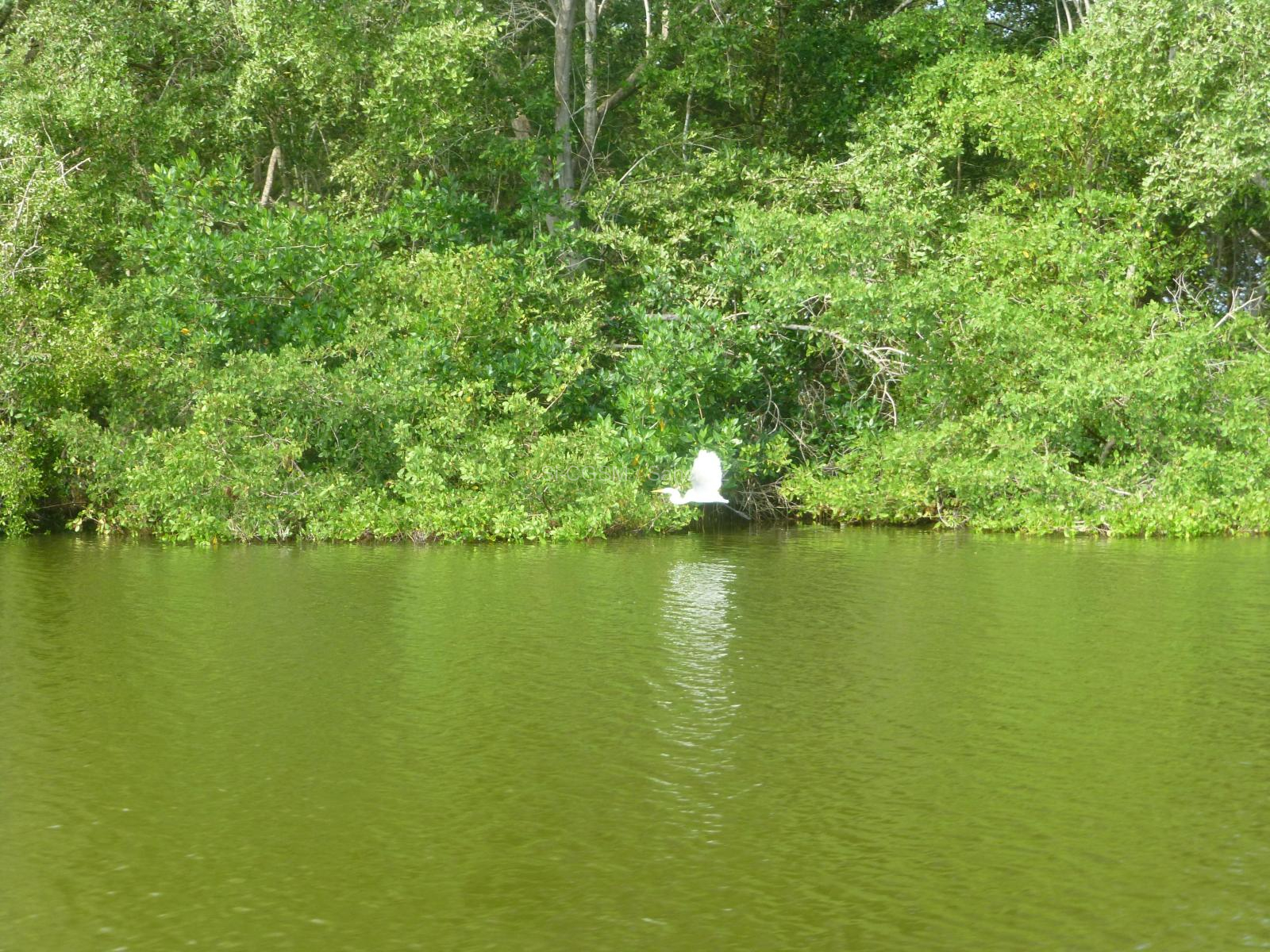
https://doi.org/10.59517/oc.e627 En esta nota se documenta el comportamiento de anidación de la Chavarría (Chauna chavaria) en áreas no protegidas del complejo de humedales Ciénaga Grande de...
Seguir leyendo...DCA
Digital Copy Available: documentos de las cuales existe una copia digital.
Bateman Vargas, N. (1998). Estructura de la comunidad íctica de las lagunas del Delta Exterior del Río Magdalena, en relación con la reapertura del Canal Clarín (Caribe Colombiano). [Proyecto de Grado]. Universidad Nacional de Colombia.
Entre marzo de 1996 y febrero de 1997 se realizó un muestreo de la comunidad íctica de las lagunas del Delta exterior del Río Magdalena, que...
Seguir leyendo...Salzwedel, H., Mejía-Rentería, J. C., & Pineda, J. E. M. (2026). Hydrilla invasion threatening Colombia’s largest coastal wetland. Boletín de Investigaciones Marinas y Costeras, 55(2), 189–199.
PDF: https://boletin.invemar.org.co/index.php/boletin/article/view/1420/1026 VIDEO: https://drive.google.com/file/d/1AX9GHjbI-HH3fuXfJtQUsoyLHzx0k2sB/view La Ciénaga Grande de Santa Marta (CGSM), el humedal costero más extenso de Colombia, ha sido monitoreada durante más de 25 años...
Seguir leyendo...Cloern, J. E., Foster, S. Q., & Kleckner, A. E. (2014). Phytoplankton Primary Production in the World’s Estuarine-Coastal. Biogeosciences, 11, 2477-2501.
https://docslib.org/doc/10254224/phytoplankton-primary-production-in-the-worlds-estuarine-coastal Estuaries are biogeochemical hot spots because they receive large inputs of nutrients and organic carbon from land and oceans to support high rates of metabolism...
Seguir leyendo...Parques Nacionales Naturales de Colombia & INVEMAR. (2024). Estudios para la formulación de una estrategia de recuperación hídrica y restauración ecológica en el Santuario de Flora y Fauna Ciénaga Grande de Santa Marta (SFF-CGSM). Convenio inter-administrativo 001 de 2023. PRY-GEO-014-23 (Final ITF01; p. 171).
DCA 1 IntroducciónDesde el año 2015, el Instituto de Investigaciones Marinas y Costeras “José Benito Vives de Andréis” –INVEMAR, el Ministerio de Ambiente y Desarrollo Sostenible...
Seguir leyendo...Thorson, T. B., Brooks, D. R., & Mayer, M. A. (1983). The evolution of freshwater adaptation in stingrays. Natn. Geogr. Soc. Res. Rep., 15, 663-694.
https://www.researchgate.net/publication/247871430_The_evolution_of_freshwater_adaptation_in_stingrays Elasmobranch fishes (sharks, skates, and rays) include species inhabiting the full spectrum of environmental salinity, and ranging from fully marine species, through those exhibiting all...
Seguir leyendo...Aldana-Domínguez, J., Montes, C., Martínez, M., Medina, N., Hahn, J., & Duque, M. (2020). Biodiversity and Ecosystem Services Knowledge in the Colombian Caribbean: Progress and Challenges. Tropical Conservation Science, 10(1).
https://doi.org/10.1177/1940082917714229 The Colombian Caribbean, one of the most biodiverse regions in the world, is facing great challenges in biodiversity conservation due to accelerated ecosystem transformations and...
Seguir leyendo...Mancera Pineda, J. E., Arteaga Sogamoso, E., & Salzwedel, H. (2025). Harmful phytoplankton in Ciénaga Grande de Santa Marta: The Largest Lagoon-Delta Ecosystem in the Colombian Caribbean. UNESCO Harmful Algae News 80: 18-20.
DCA https://doi.org/10.5281/zenodo.17220270 A thorough review of the extant studies was conducted to assess which phytoplankton species reported since 1996 in the Ciénaga Grande de Santa Marta...
Seguir leyendo...